Addressing Staffing Shortages and Safety in Correctional Facilities
 Editorial Staff
Addressing Staffing Shortages in Corrections Facilities
Insufficient staffing in prisons and jails poses significant challenges, affecting safety and response times. This issue is prevalent across the nation and is a primary concern among corrections personnel.
Mitchell Spruiell, an AFSCME member and corrections officer in Texas, describes the situation: “With fewer eyes, there are slower response times, and everyone is stretched thin and that adds to the tension. It builds and builds and then breaks, and nobody wants that.”
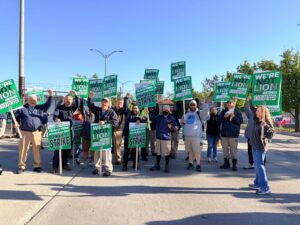
National Correctional Officers and Employees Week highlights the vital role of these workers in public safety and calls for better support in terms of staffing and resources. The focus is on ensuring fair wages, protective gear, balanced work schedules, and a strong union presence to advocate for safer working conditions.
Union Advocacy for Better Conditions
Corrections officers leverage their union affiliations to push for improved workplace safety and resources. Spruiell, leading the AFSCME Texas Correctional Employees Council 907 (TCEC), credits union negotiations for enhancements in protective gear, such as personal stab-proof vests and improved communication tools.
This profession remains high-risk, with over 500 officers losing their lives in the line of duty since 1841, as reported by the National Law Enforcement Officers Memorial. Policy changes often follow such tragedies, like the 2023 incident near Huntsville, Texas, which led to significant procedural updates.
Resistance to Privatization
AFSCME stands against the privatization of correctional facilities, arguing that it undermines service quality and accountability while increasing taxpayer costs. The union achieved a legal victory by successfully arguing that private prison contractors should not be exempt from lawsuits, ensuring public accountability remains intact.
Nationwide Efforts to Enhance Workplace Environment
AFSCME members nationwide are committed to enhancing the work environment for corrections personnel. These workers, often unseen by the public, play a crucial role in maintaining safety both inside and outside prison walls. Their dedication to public service is invaluable, as noted by Spruiell: “If we don’t hold the line, who will?”