Wildland Fire Smoke Threatens Health with High Ozone and Particle Levels
 Editorial Staff
Wildfire Smoke: A Growing Health Concern Across North America
Wildland fire smoke is increasingly becoming a significant risk to both workers and the general public, with parts of the United States and Canada experiencing elevated levels of ozone and particulate matter. The persistent heat exacerbates this danger, posing a threat not only to those outdoors but also to individuals indoors, as smoke can infiltrate through open doors, windows, and HVAC systems that are not equipped to filter such minute particles.
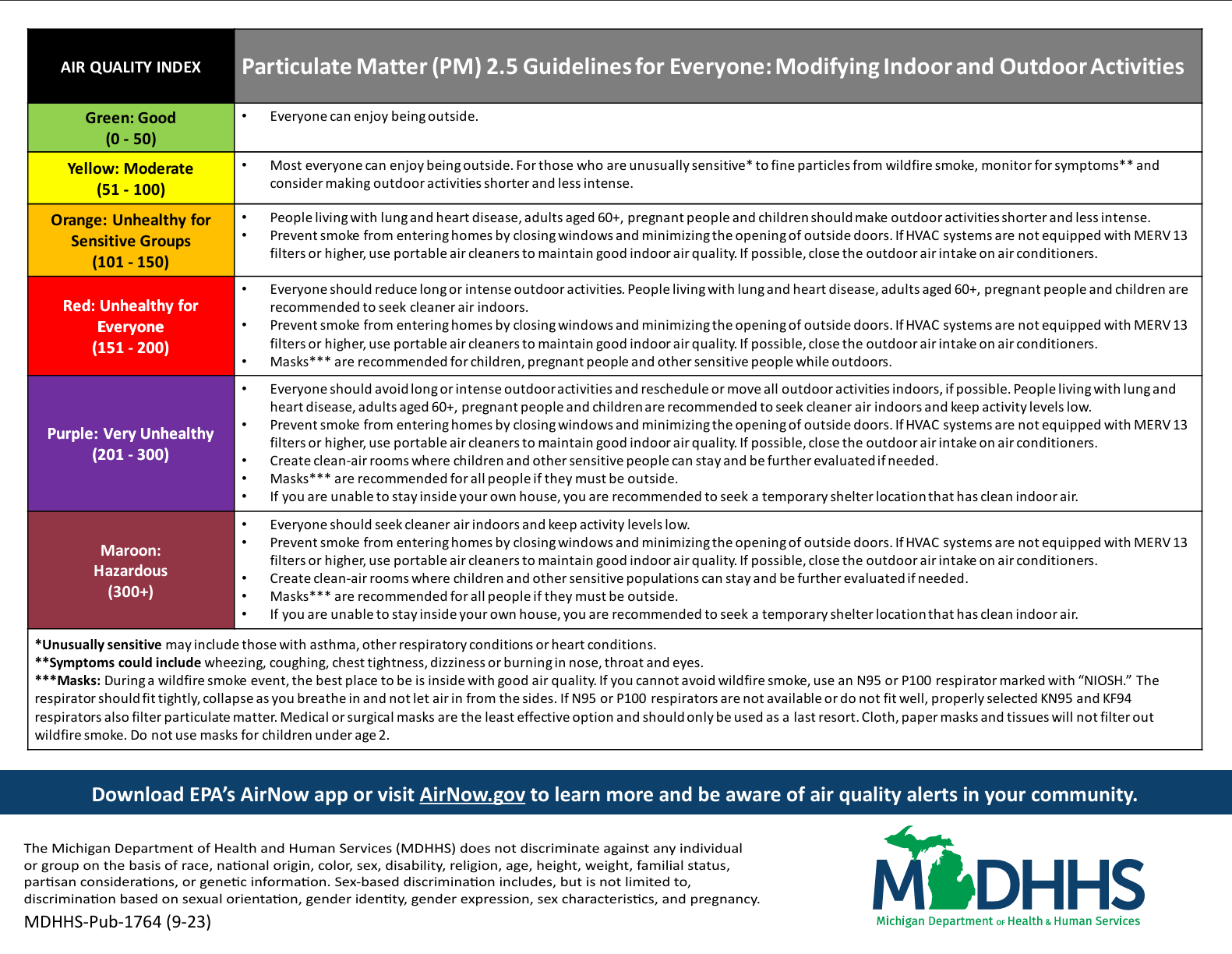
The U.S. Environmental Protection Agency (EPA) provides an Air Quality Index (AQI) that categorizes air quality from “Good” to “Hazardous” based on airborne particulates. Vulnerable groups, such as the elderly and those with pre-existing health conditions, face greater risks as air quality deteriorates. The Michigan Department of Health and Human Services offers a visual guide to the EPA's air quality levels and corresponding safety measures:
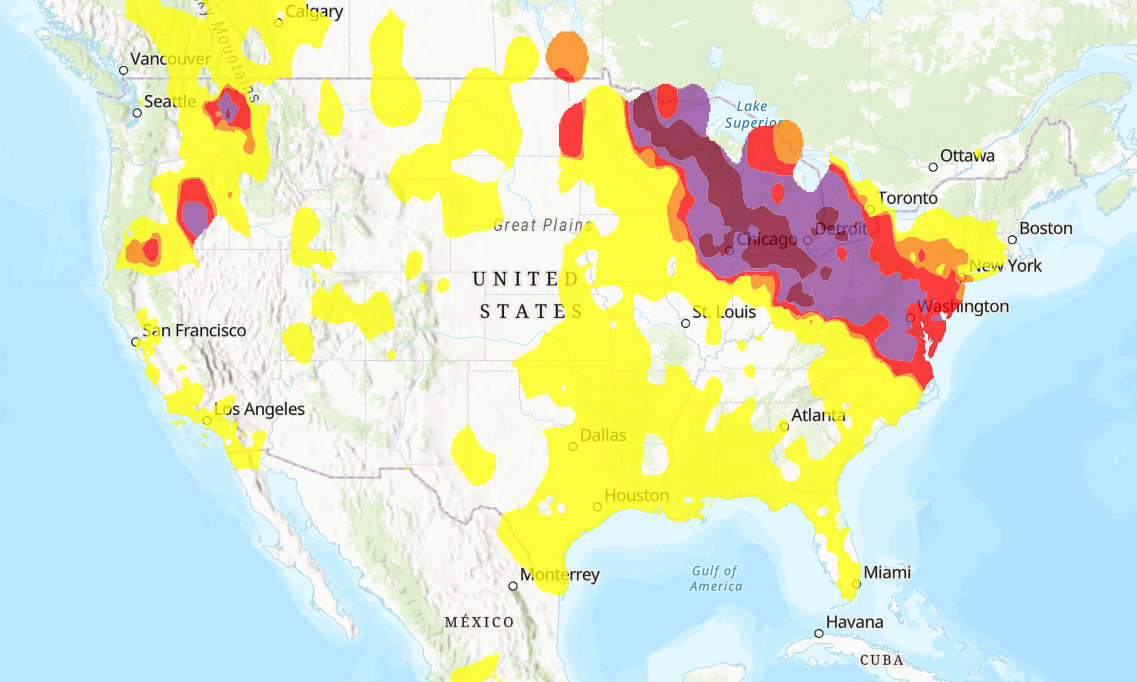
To assist in health protection, the EPA collaborates with the U.S. Forest Service on the AirNow Fire and Smoke Map. This tool provides real-time updates on smoke conditions. As of 12 pm Eastern today, here's the current map:
Exposure to wildland fire smoke can lead to various health issues, particularly for individuals with existing heart or lung diseases, or those engaged in physically demanding or prolonged outdoor work. The National Institute for Occupational Safety and Health (NIOSH) identifies several potential health effects, including:
- Eye irritation, sore throat, wheezing, and coughing
- Exacerbation of asthma and chronic obstructive pulmonary disease (COPD)
- Bronchitis and pneumonia
- Negative birth outcomes
- Cardiovascular issues
NIOSH advises that employers and workers take specific measures to minimize smoke exposure. Recommended actions include:
- Monitoring air quality through the US Fire and Smoke Map or local health department resources
- Adjusting work tasks to less smoky areas or times
- Reducing strenuous physical activities
- Providing frequent breaks in smoke-free environments
- Facilitating indoor work or locations with less smoke exposure
For those working indoors, it is crucial to maintain closed windows and other access points to minimize smoke ingress. Operating HVAC systems on recirculate mode or reducing external air intake, along with the installation of high-efficiency filters, can also help. However, avoid using ozone or ion generating devices as they may exacerbate air quality issues.
For outdoor workers, respirators might be crucial, particularly in scenarios of high particulate exposure. Employers should ensure that respirator use complies with the Occupational Safety and Health Administration’s (OSHA) Respiratory Protection standard (29 CFR 1910.134). For voluntary respirator use, adherence to OSHA guidelines is recommended.
Important considerations for respirators include:
- Filtering facepiece respirators (N95 or P100) are effective against particulate matter but not gases.
- Tight-fitting respirators are unsuitable for those with facial hair that affects the seal.
- Respirator use during heat or physical activity can increase heat illness risk, necessitating regular breaks and hydration.
---
Read More USA Works News