US Influence Grows in Latin America: Economic, Security Initiatives Expand
 Editorial Staff
The Facts -
- The US is reinforcing influence in Latin America through economic and security ties.
- The Andes-Atlantic Corridor aims to boost Argentina's mineral and energy markets.
- Venezuela's political transition and security cooperation remain key UNGA topics.
U.S. Influence Grows in Latin America During UNGA
NEW YORK—The United States is making significant strides in reestablishing its diplomatic, economic, and security presence in the Western Hemisphere. This effort has become more apparent as Latin American leaders recently converged in New York for the United Nations General Assembly (UNGA), with numerous U.S.-linked announcements highlighting the country's growing involvement in the region.
Economic Initiatives Strengthen Ties
Key economic discussions focused on critical minerals and infrastructure investments. A notable development was the announcement of the Andes-Atlantic Corridor, a joint initiative by the U.S. and Argentina. This project aims to connect Argentina's energy and minerals sectors to Atlantic ports, enhancing access to Western markets. Additionally, up to seven billion dollars in financing has been outlined by the U.S. Export-Import Bank for various energy and infrastructure projects through 2027.
Colombian Vice President José Manuel Restrepo, substituting for President Abelardo de la Espriella, used his trip to promote Misión Crecer, which aims to boost the nation's economic growth from 2.6% in 2025 to 6%. New leaders from Chile, Peru, and Honduras also echoed similar sentiments, emphasizing openness to investments and policies supporting economic growth.
Venezuela's Transition Gains Attention
This year's UNGA spotlighted Venezuela's political future, marked by the first in-person meeting between Delcy Rodríguez and Trump since Nicolás Maduro's ousting. Rodríguez also engaged with international financial organizations on topics like Venezuela's debt and economic recovery. Discussions included stabilizing Venezuela and preparing for democratic elections, though no timeline was provided. Rodríguez stated "there will be elections," without specifying when.
Security Cooperation Takes Shape
The UNGA served as a backdrop for the second Shield of the Americas meeting, a major U.S.-led security initiative. Fifteen countries, including recent additions Peru and Colombia, signed a joint statement expanding the coalition's focus to economic cooperation, security, and coordination.
The coalition's first action involved coordinated measures against criminal groups like Mexico's Sinaloa Cartel and FARC. This entails asset freezes and visa restrictions. Although Mexico, Brazil, and Venezuela are not Shield members, cooperation with their governments is essential for targeting these groups.
Particularly interesting is the inclusion of Venezuela's Cártel de los Soles, previously termed a Foreign Terrorist Organization. The group's ties to current Venezuelan officials complicate enforcement of the Shield's measures.
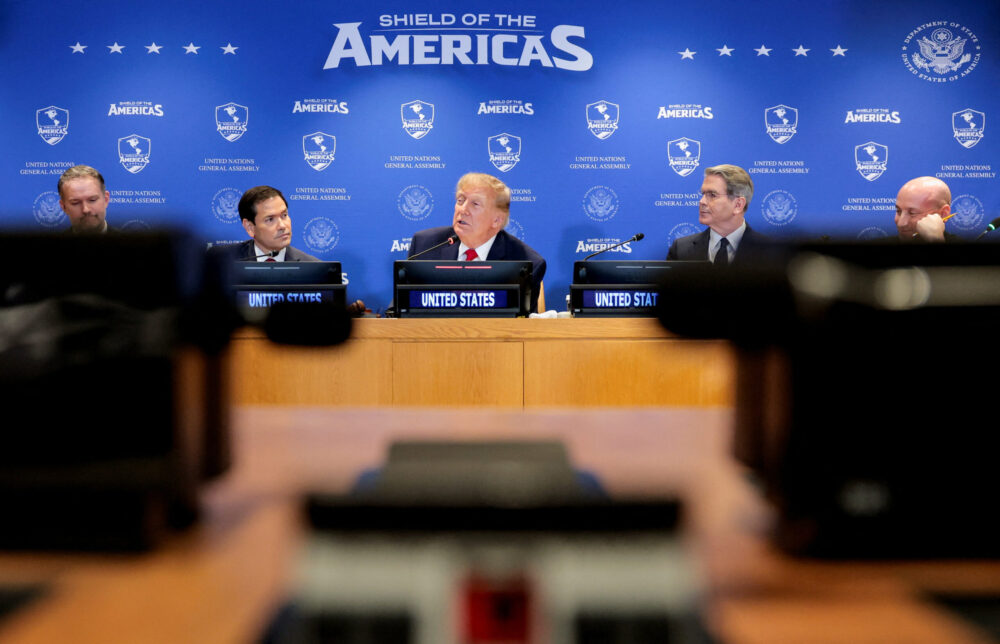
Notably, the U.S. and Venezuela coordinated an operation against Tren de Aragua, showcasing potential for cooperation. However, the Shield's statement made no specific commitments on Venezuelan elections or reforms, which remain key topics of debate.
The ongoing discussions at this year's UNGA seek to yield results that bolster investment, security, and institutional integrity across Latin America.
---
Read More USA Works News