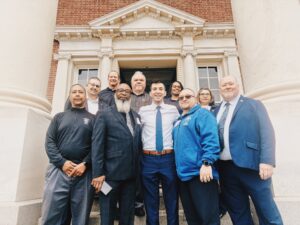
AFSCME Members Push for Stronger Workplace Safety on Workers Memorial Day
 Editorial Staff
Workplace Safety Still a Concern Despite Legal Protections
Workers across various sectors continue to face hazardous conditions despite legal mandates designed to ensure their safety. The Occupational Safety and Health Act of 1971 established the right to a safe working environment, yet preventable workplace incidents remain alarmingly frequent.
Recent data from 2024 reveals that 5,070 workers lost their lives, while approximately 135,000 succumbed to occupational diseases, excluding COVID-19.
AFSCME President Lee Saunders highlighted the ongoing issue, stating, “On Workers Memorial Day, we mourn the loss of all those who have died, been seriously injured or made ill while on the job. Going to work and earning a paycheck to support your family should not be hazardous to your health.” He criticized current administration policies for weakening worker protections by reducing funding for inspections and enforcement.
Particularly concerning is the lack of approved safeguards against extreme heat and the persistent high rates of workplace violence in various sectors. These issues, Saunders argued, increase the risk of accidents and fatalities, emphasizing the need for stronger protections such as heat standards and workplace violence regulations.
In 2026, anti-labor policies threaten to further erode workplace safety. The Occupational Safety and Health Administration (OSHA) is experiencing its lowest staffing levels ever, resulting in a significant decrease in the agency’s enforcement actions. During the first three-quarters of 2025, penalties decreased by 47%, and OSHA cases dropped by 35% compared to previous years.
Additionally, unionized workplaces are no longer prioritized for safety investigations, a move seen as an aggressive stance against unions. AFSCME continues to advocate for better safety programs and enforcement despite these challenges.
World Trade Center Health Program Receives Crucial Update
Workers Memorial Day also serves as a reminder of the September 11 attacks and the ongoing health issues faced by first responders and survivors. The 9/11 Responder and Survivor Health Funding Correction Act, enacted in February, ensures full funding for the World Trade Center Health Program (WTCHP) through 2090.
More than 137,000 individuals have benefited from the program, with 3,000 new participants joining each quarter. The program addresses the health impacts of the toxic environment created by the World Trade Center’s collapse.
AFSCME District Council 37 played a pivotal role in advocating for the recognition and treatment of 9/11-related diseases. Their efforts culminated in the passage of this vital legislation, which supports ongoing medical needs.
State-Level Initiatives Lead the Way in Worker Protections
In response to federal rollbacks, states are taking proactive measures to enhance worker safety. In 2025, Illinois enacted the Workers’ Rights and Worker Safety Act, preserving key protections despite federal changes. Similar legislation has been introduced in Colorado and Rhode Island.
Virginia has set a precedent in the South by adopting heat regulations that mandate additional precautions for workers in high temperatures. This legislation, endorsed by AFSCME, was signed into law in April.
AFSCME’s influence extends to Arizona, where members were crucial in establishing heat illness guidelines for employers. Across the country, AFSCME members are actively engaged in efforts to promote workplace safety through legislative advocacy, contract negotiations, and organizing efforts. Notable achievements include:
- Successful contract negotiations by Kaiser Permanente professionals in California and Hawaii, emphasizing stronger staffing provisions.
- A summit in Washington state addressing safety concerns, including workplace violence, organized by library members.
- Defense of workplace protections for pregnant and postpartum corrections officers in Texas.
This Workers Memorial Day, AFSCME members continue to champion respect, dignity, and safety for all workers, drawing inspiration from their collective dedication to public service.